Friday, 19 June 2026Subscribe

The Basics

Everybody starts somewhere.

A welcoming guide to the fundamentals of tennis — the scoring, the rules, the strokes, the kit and the court. Read it in order, or skip to the bit you need.

A scoreboard at a clay-court tennis match

Chapter One

How the scoring actually works.

Tennis scoring sounds strange at first, and then suddenly it doesn't. Inside a game, points go 15, 30, 40, and then game. If both players reach 40, that's called deuce, and someone has to win two points in a row to take the game.

Games stack into sets. The first to six games wins the set, but you have to win by two — so a set can stretch to 7–5, or go to a tie-break at 6–6. Matches are best of three sets (best of five for the men at the Grand Slams).

When you hear a commentator say "love," they just mean zero. That's the whole secret.

Two players shaking hands at the net

Chapter Two

The rules, in plain English.

The ball has to land inside the lines on your opponent's side. It can bounce once before you hit it back, or you can take it out of the air. If it bounces twice, the point is over.

You get two serves. If you miss the first, you serve again. Miss both and that's a double fault — your opponent wins the point.

Touch the net, hit the ball twice, or let it land outside the lines and you lose the point. Everything else is more or less up to you.

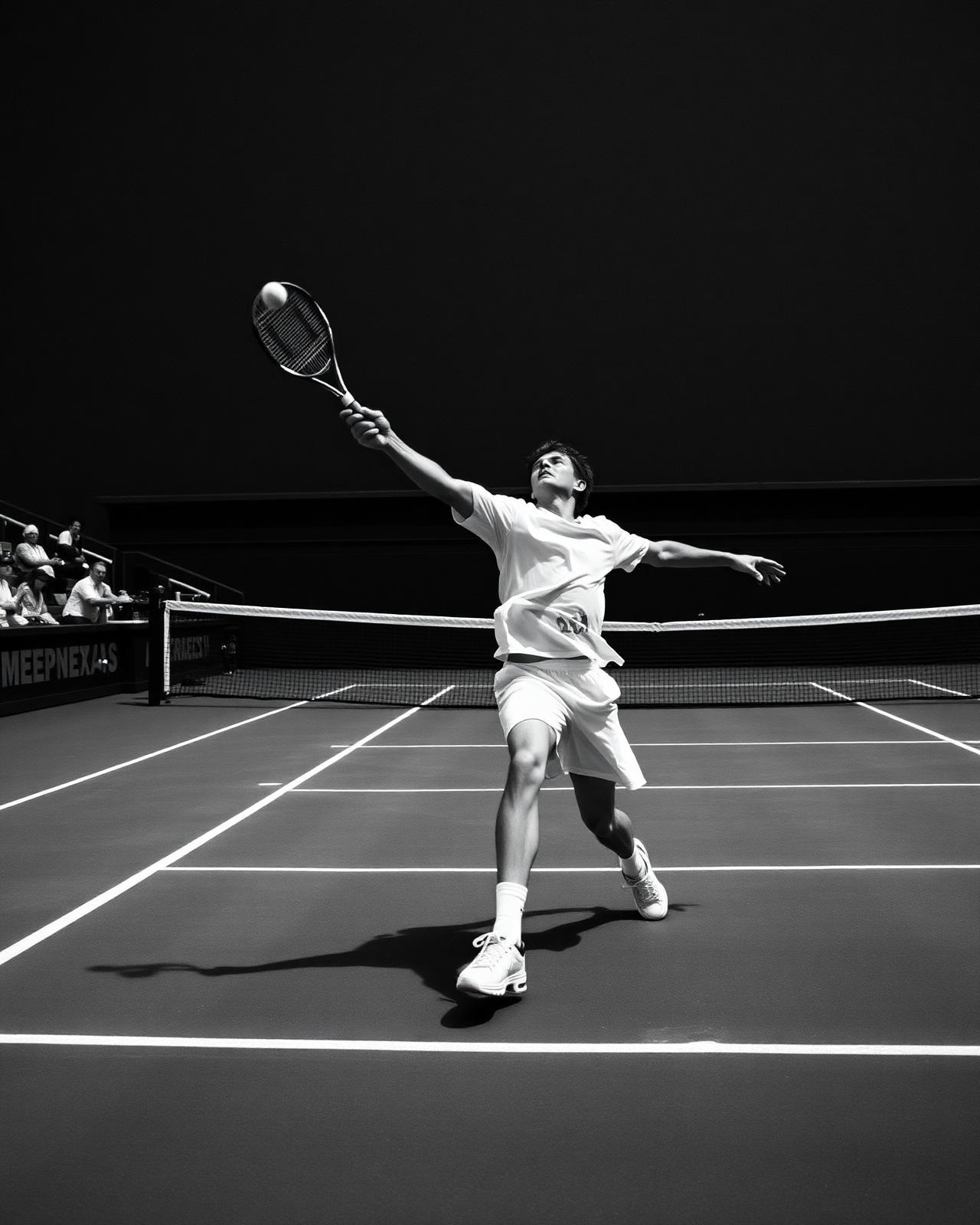
A player mid-forehand in soft afternoon light

Chapter Three

The three shots that build a game.

The serve starts every point. Stand behind the baseline, toss the ball up, and hit it diagonally into the service box. Aim for consistency before power — a serve that lands is always better than one that doesn't.

The forehand is your dominant-hand groundstroke. Turn your shoulders, swing low to high, and brush up through the ball. It should feel a little like throwing a frisbee.

The backhand can be one-handed or two-handed. Most modern players use two hands for stability and control. Step in, keep the racket out in front, and finish over your shoulder.

Spend ten minutes a session on each. The improvement compounds faster than you'd think.

A row of tennis rackets propped against a wall

Chapter Four

How to choose your first racket.

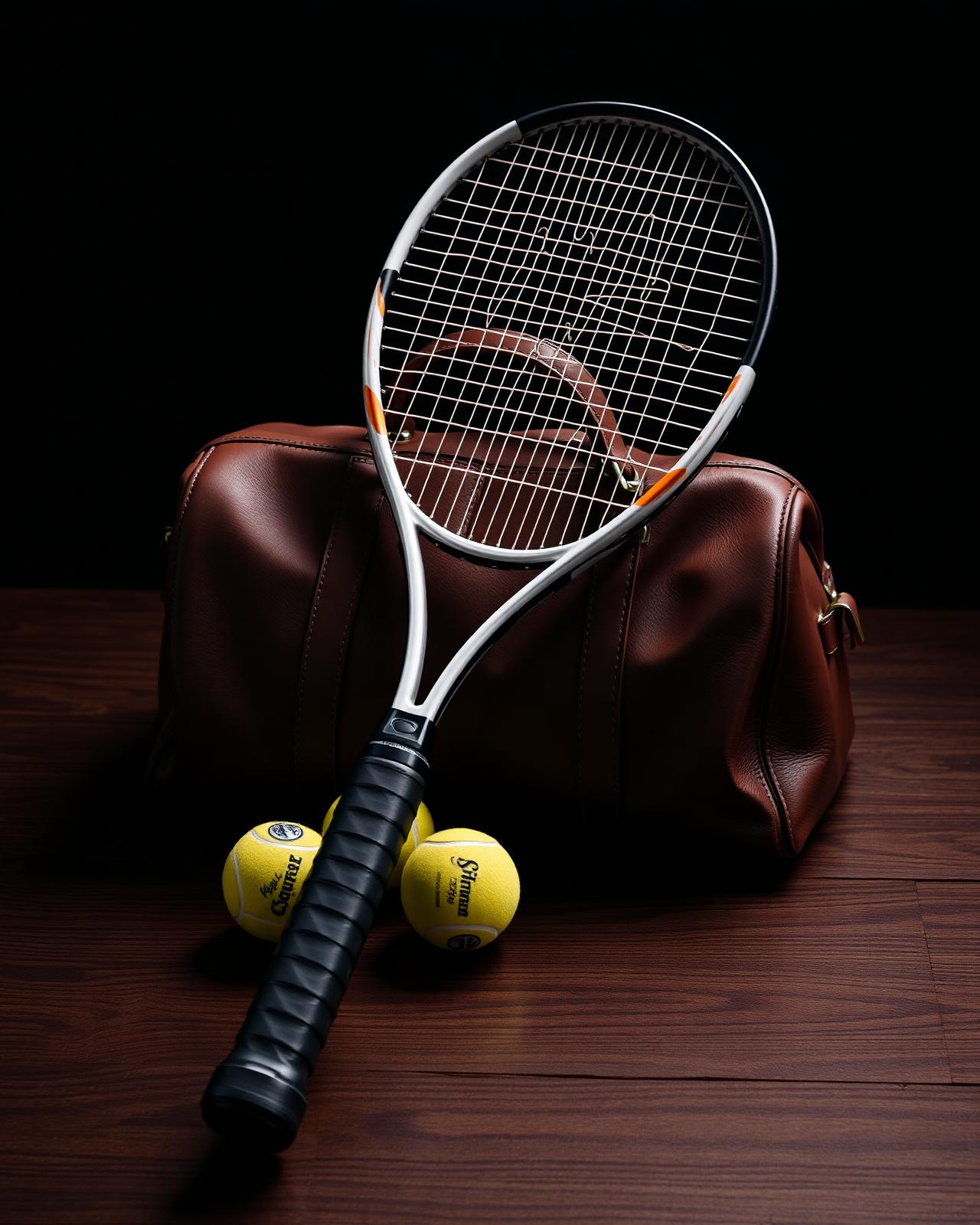
Walk into a tennis shop and the wall of rackets can feel like too much. Three things matter to start: head size, weight, and grip.

A larger head (around 100–105 square inches) is more forgiving and gives you a bigger sweet spot. Lighter rackets (260–290 grams) are easier to swing while you're still building strength. Grip size should let your index finger just slide into the gap between your fingertips and palm when you hold it.

Skip the pro player frames for now — they're heavy, demanding, and rewarding only when your technique is ready. Start friendly. Upgrade later.

Overhead view of a tennis court showing its lines

Chapter Five

Reading the lines on the court.

The outer rectangle is the doubles court. The slightly narrower one inside is for singles — the two tramlines on the sides are out of bounds when you're playing one-on-one.

The two service boxes near the net are where your serve has to land. The baseline is where you stand to serve, and the centre mark tells you which half to serve from. Right side first, then left, then right again, all the way through the game.

Once you can name every line without thinking, the whole court starts to feel smaller — in a good way.

A red clay tennis court in late afternoon light

Chapter Six

Clay, grass, hard — three different sports.

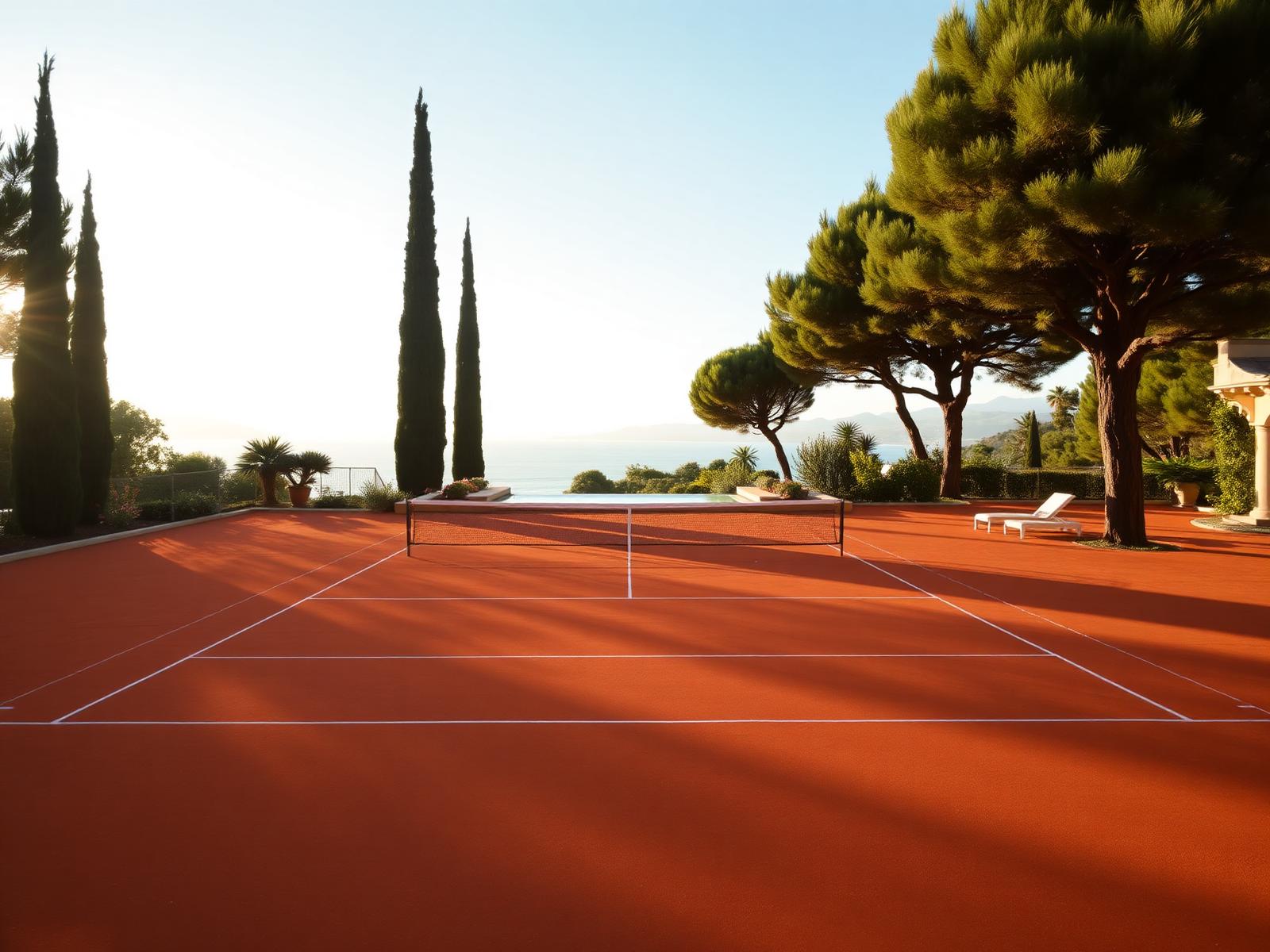
Clay is slow and high-bouncing. Points are longer, sliding is part of the technique, and patience usually wins. This is the surface of Roland-Garros and most of the European spring.

Grass is fast and low. The ball stays under your knee, serves dominate, and points end quickly. Wimbledon is the spiritual home, and almost nowhere else.

Hard courts sit in the middle — true bounce, medium speed, easy on your timing and hard on your joints. Most clubs you'll play at are hard courts, and so are the US and Australian Opens.

Try all three if you can. You'll learn more about your own game in a week of switching surfaces than in a month of staying on one.

A pair of tennis shoes and a racket bag by a court bench

And then.

Just go play.

You don't need to know everything before you step on a court. Most of this you'll learn by doing — by missing serves, mis-hitting backhands, and discovering which surface suits you.

Find a friend who plays. Take a lesson if you can. Walk onto a public court with a cheap can of balls. The sport gives back exactly what you put in, and then a little more.

The Saturday Letter

A tennis newsletter from a friend.

Every Saturday, I send a short note about the week in tennis — what I watched, what I'm wearing on court, where I'm playing next, and the small things worth your time. That's it. No spam, no filler.

Free · No spam · Unsubscribe in one click